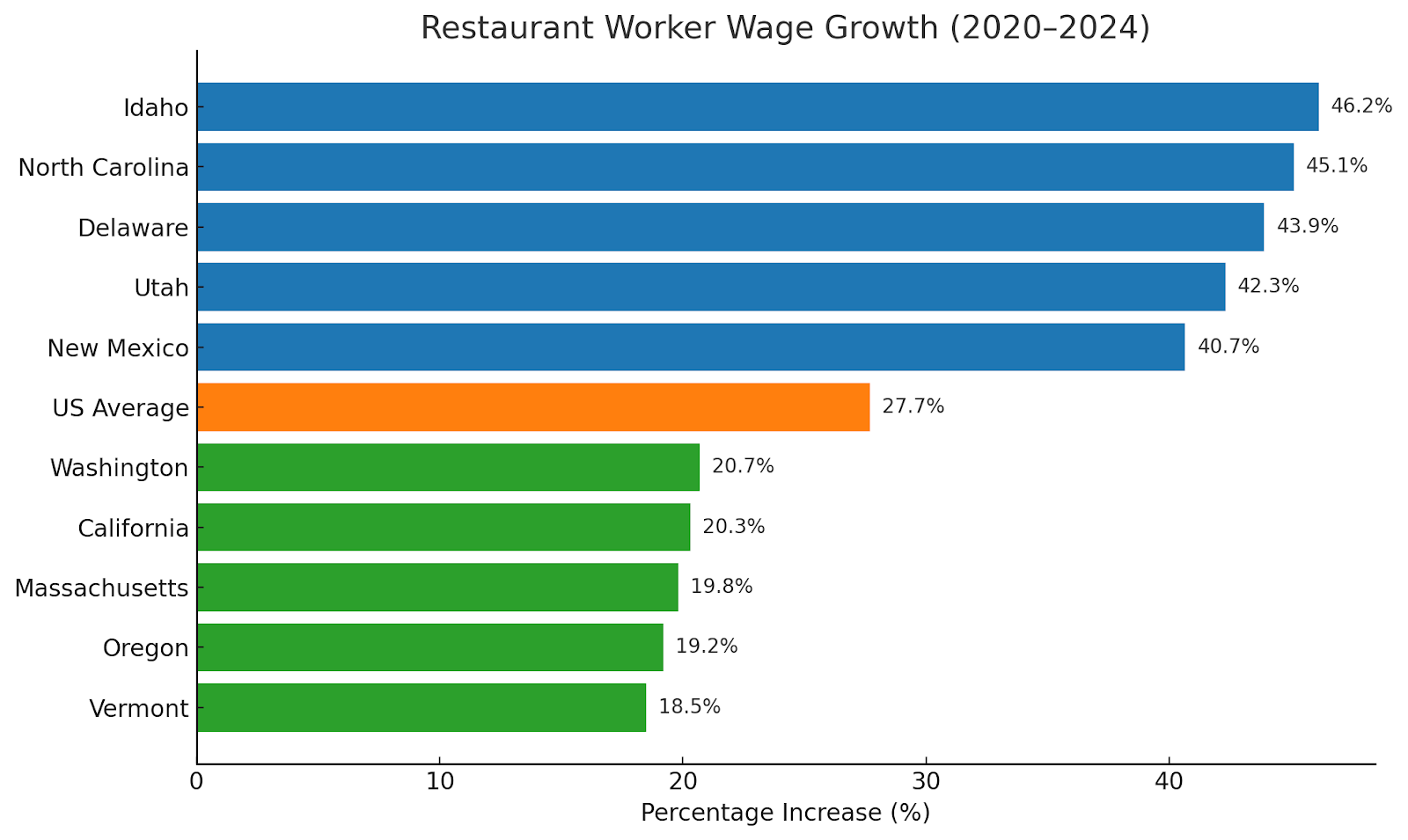
In recent years, restaurant labor costs have risen at a pace that far outpaces general inflation. Because wages for fast food workers increased nearly 30% from 2020 to 2024, restaurant operators have been forced to consider automation as a way to reduce their costs. 65% of quick-service restaurants deploy self-service kiosks, and 60% of restaurant operators believe automation improves efficiency. This rapid adoption is not surprising since kiosks can reduce labor costs by up to 25% and speed-up service by approximately 40%.
While kiosks promise efficiency and labor savings, their hidden costs often go overlooked. Beyond the initial investment, they introduce operational challenges that can frustrate guests. Kiosks can create as many problems as they solve, and they undermine the very efficiencies they were designed to deliver.
TapIn’s TapPoints keep the good parts of kiosks but ditch the bad. Orders are faster because the system can remember a customer’s last order instantly. Upselling works smarter by using data from other TapIn locations.
There’s no hygiene issue because customers use their own phone and not a public touchscreen. TapPoints also work without the restaurant’s power or Wi-Fi. Their portable, space-saving design avoids the floor space footprint of bulky kiosks, and they require virtually no maintenance. Plus, every interaction is secure and verified through a one-time URL, which makes it much harder for scammers to exploit.
Automation is here to stay, but it doesn’t have to come at the expense of the restaurant experience. TapIn offers the speed, costs savings, and data benefits of kiosks while avoiding their biggest drawbacks.
1 https://gitnux.org/digital-transformation-in-the-restaurant-industry-statistics/
2 https://www.restroworks.com/blog/restaurant-automation-statistics
3 Ibid
Here at TapIn, our mission is to effortlessly connect people. Contact us to learn more or share your thoughts.

© 2026 Tapin Solutions Inc. All Rights Reserved