

Book a Demo

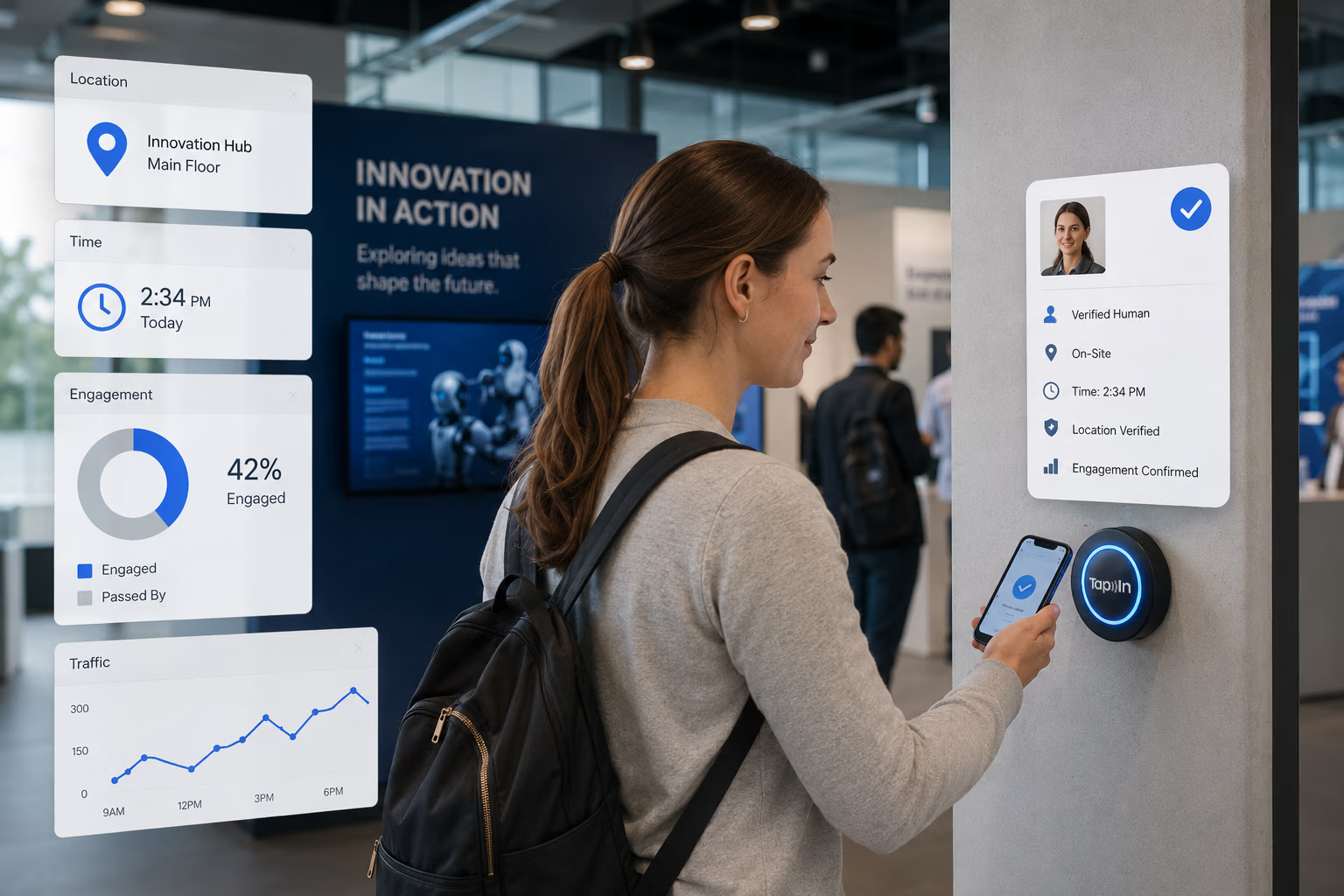


For years, organizations were told the future was fully digital: more clicks, forms, ads, links, and dashboards. If something happened online, it could be measured and optimized.
But the digital world has changed.
Online engagement is no longer easy to trust. Bots, fraud, privacy restrictions, AI-generated content, spoofed links, and attribution gaps have made digital signals harder to interpret. At the same time, people are returning to physical experiences. The next shift is not away from digital. It is toward connecting digital engagement to real-world presence.
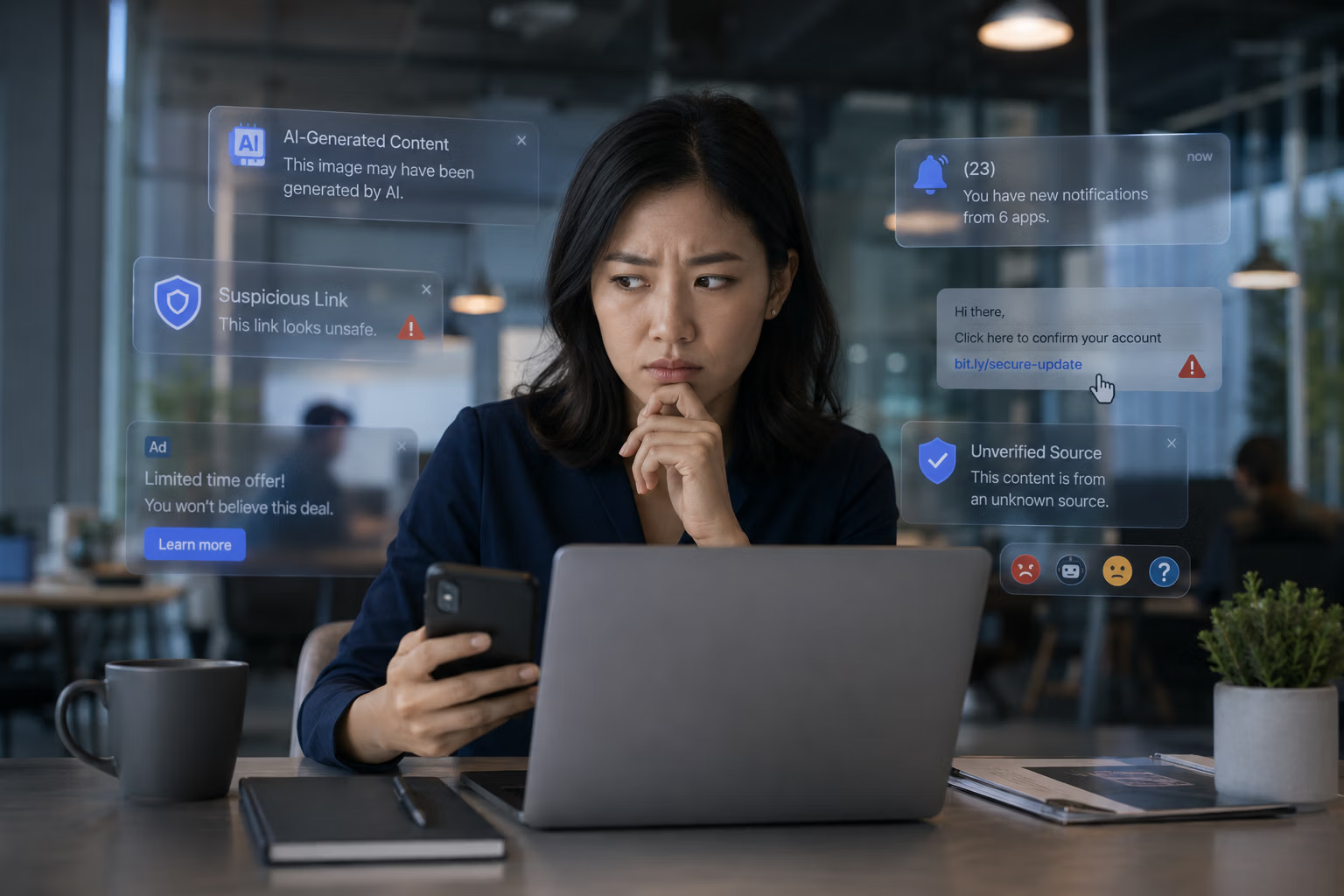
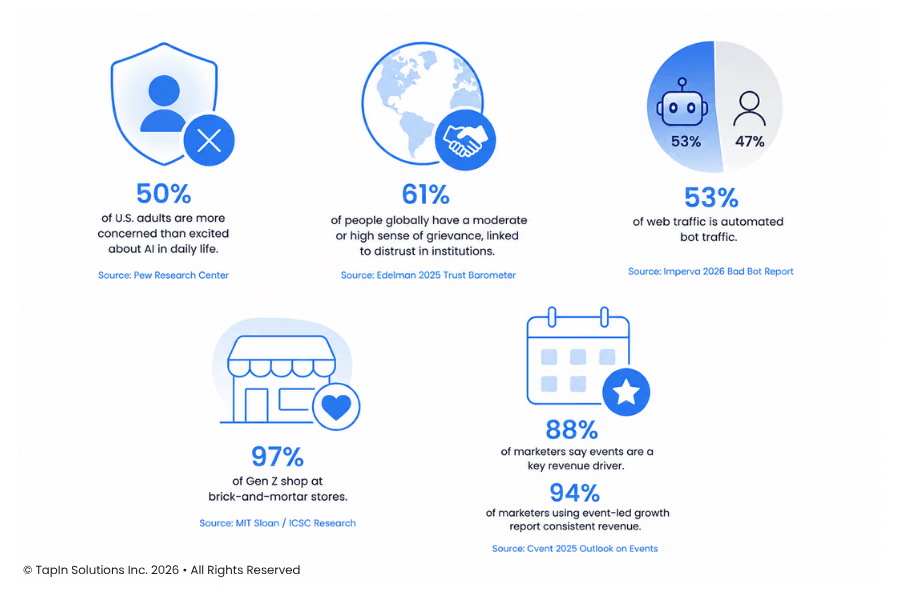
People are more cautious about what they see online. Pew Research Center reported that 50% of U.S. adults are more concerned than excited about the increased use of AI in daily life, while only 10% are more excited than concerned. That uncertainty affects how people respond to forms, links, ads, pop-ups, and unfamiliar web pages.
Edelman’s 2025 Trust Barometer also found that 61% of people globally have a moderate or high sense of grievance, which is connected to distrust across business, government, media, and NGOs.
For organizations, this means a click, visit, or form submission can no longer be treated as automatically meaningful. Digital engagement still matters, but it needs more context.
One of the biggest problems with online engagement is that not all traffic is human. Imperva’s 2026 Bad Bot Report found that automated bot traffic accounted for more than 53% of all web traffic in 2025, while human traffic fell to 47%.
This creates a measurement challenge. Organizations need better ways to separate real human interest from digital noise.
Even as digital tools grow, people continue to value physical experiences. MIT Sloan highlighted ICSC research showing that 97% of Gen Z respondents shop at brick-and-mortar stores. People still want immediacy, interaction, discovery, and experiences they can see, touch, and participate in.
Events tell a similar story. Cvent’s 2025 research reported that 88% of marketers identify events as a key revenue driver, and 94% of marketers using event-led growth report consistent revenue from events.
Physical environments are not disappearing. They are becoming more important because they create attention, trust, context, and memory in ways digital-only channels often struggle to match. The challenge is that many physical interactions are still poorly measured.
Most organizations already track digital activity, including website visits, email opens, ad clicks, form fills, and CRM activity. But those signals are becoming harder to trust on their own.
QR codes helped make physical objects clickable, but they are mainly access tools. They can send someone to a page, but they do not always verify where the interaction started, whether the person was physically present, or whether the code was scanned from the original location.
They also come with trust concerns. The FTC warns that scammers can hide harmful links inside QR codes, while the FBI has warned that cybercriminals can tamper with QR codes to redirect people to malicious sites.
So the market is moving toward something stronger: verified physical engagement.
TapIn fits into this shift because it connects a digital action to a real physical moment. Instead of relying on a printed code, shared tablet, clipboard, or generic link, a person taps their own phone to a physical TapPoint.
That tap can confirm attendance, open content, collect form data, share resources, launch a guide, trigger follow-up, record engagement, and more. More importantly, it creates a signal tied to a real-world context.
For the user, the interaction is simple. For the organization, the data is more meaningful.
The future is not digital or physical. It is connected.
Organizations need to know not only that someone clicked, scanned, submitted, or visited a page, but where that engagement started and what physical context created it.
TapIn helps close that gap by turning physical spaces into measurable engagement points. A tap connects a real person, in a real place, at a real moment, to a digital action.
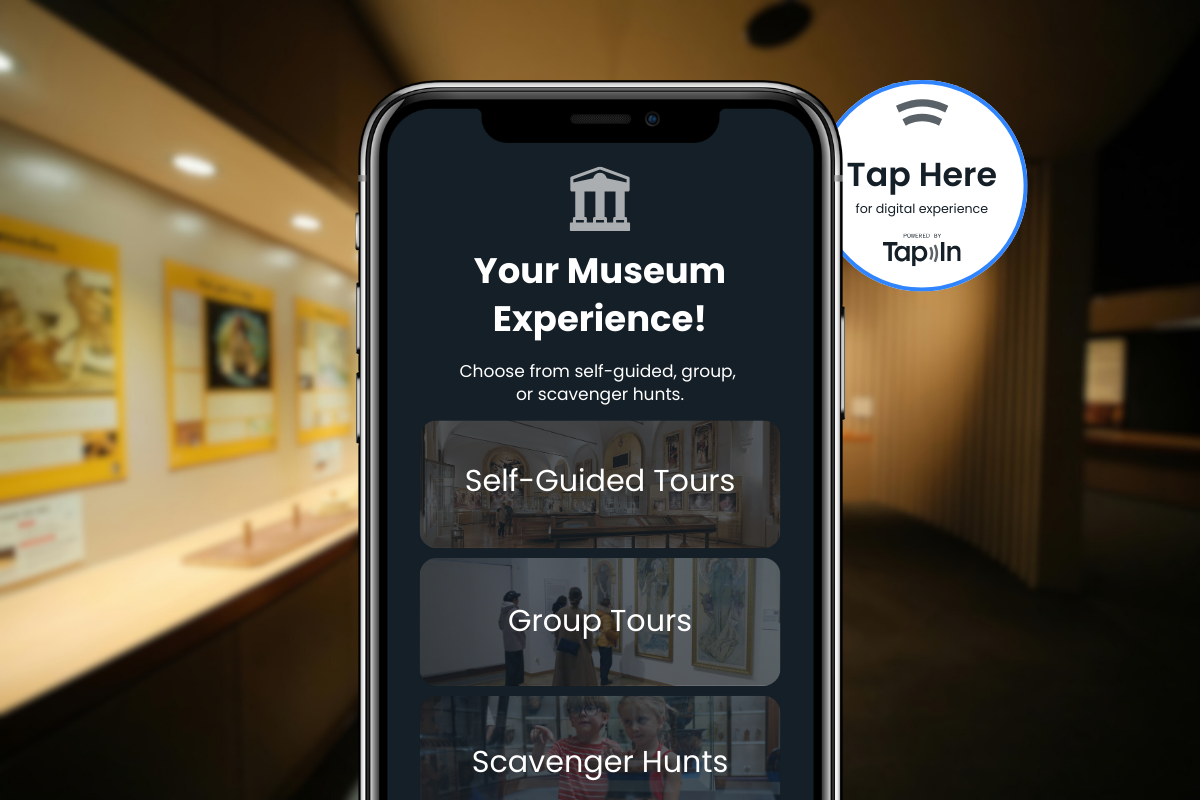
TapIn enables instant, tap-to-launch digital experiences—no apps, no QR codes, no friction. Create customizable experience pages using AI with only your website link, and deploy them across tap-enabled devices like cards, hubs, and stickers. Track real-world engagement and update experiences instantly. Built for sales, events, museums, hospitality, training, and more.
Get the latest updates.
Sign up to our mailing list below and be the first to know about new updates.

.svg)


.png)
.png)

.png)
.png)